Modi's BJP Secures Bengal: A Pivotal Moment for Indian Democracy
Prime Minister Modi's party achieves a historic victory in West Bengal, marking a significant shift in Indian politics and raising questions about the nation's democratic trajectory.
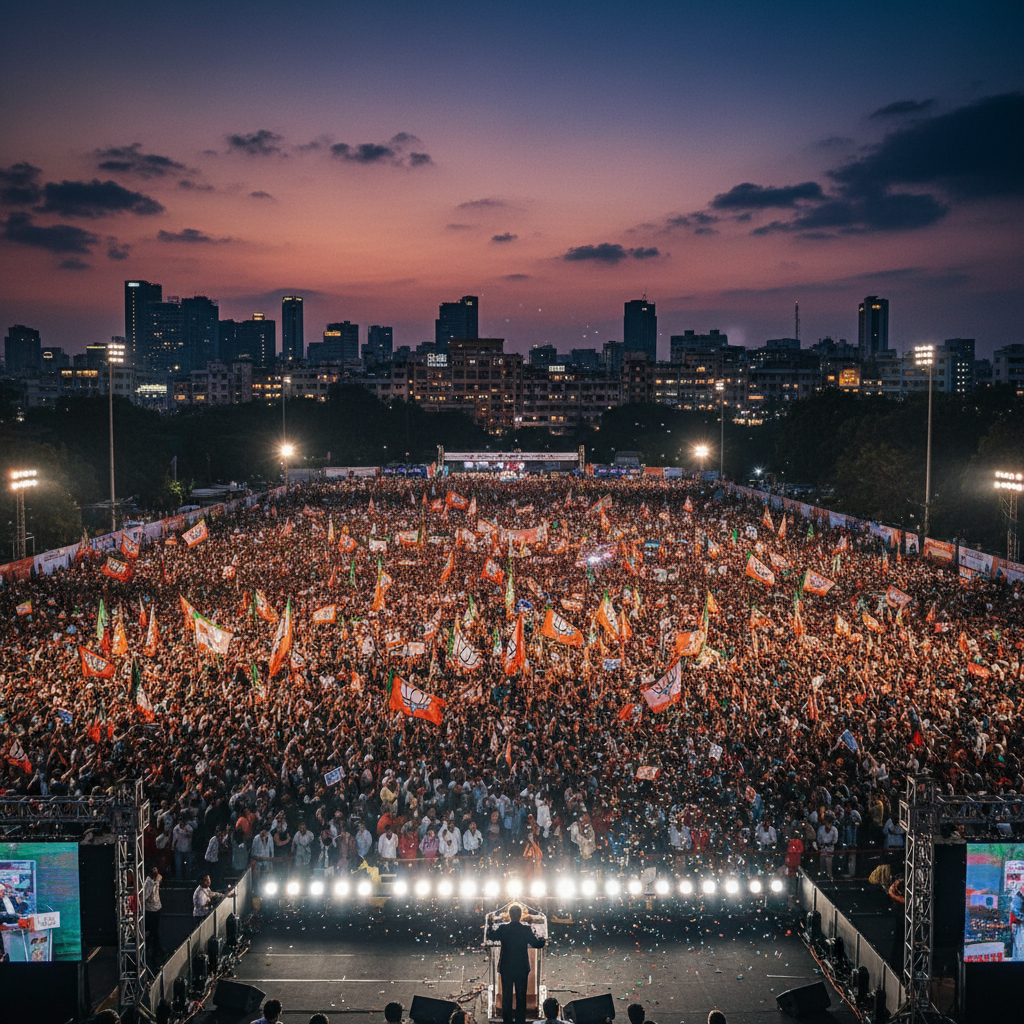
Historic West Bengal Win Signals Shift in Indian Politics
NEW DELHI - In a landmark achievement, Prime Rreim Minister Narendra Modi's Bharatiya Janata Party (BJP) has secured its first-ever electoral victory in the eastern state of West Bengal. This triumph, arguably the most consequential for the Hindu nationalist party since its rise to national power in 2014, redraws the political map of India and sparks debate about the future of its democratic fabric.
The elections, held across West Bengal and four other regions including Assam, Tamil Nadu, Kerala, and Puducherry, saw the BJP retain power in Assam and its coalition emerge victorious in Puducherry. However, the Bengal result stands out, signaling a significant expansion of the BJP's influence into a region long considered a bastion of secular and leftist politics.
Bengal's Complex Political Legacy
West Bengal, a state steeped in history and known for its intellectual and cultural contributions, presents a complex political narrative. Historically, it has been a crucible of both anti-colonial movements and diverse political ideologies. Following India's independence, the state saw the rise of a formidable communist government that governed for an unprecedented 34 years, until a centrist coalition led by Mamata Banerjee's Trinamool Congress (TMC) ousted it in 2011.
Remarkably, West Bengal has also historically been a pocket of relative communal harmony, often remaining insulated from the widespread religious tensions that have plagued other parts of India during critical periods. This included periods of intense anti-Sikh riots in 1984 and nationwide violence following the demolition of a mosque in 1992. The question now looms large: will this tradition of amity endure under a BJP administration?
BJP's Strategy and Electoral Controversies
The BJP's ascent in West Bengal, a state with nearly 100 million people, including a significant Muslim minority, was fueled by a potent combination of anti-incumbency sentiment against the incumbent TMC and the party's established narrative often tinged with anti-Muslim rhetoric. The BJP's campaign focused on themes of national identity and border security, framing alleged illegal immigrants, predominantly Muslim, as a threat.
The victory has been met with praise from Prime Minister Modi, who declared it a "historic victory" and promised "good governance." However, the electoral process itself has faced scrutiny. The Election Commission of India (ECI), an autonomous body, has been accused by opposition parties and observers of irregularities, including a controversial revision of electoral rolls that reportedly disenfranchised millions. Analysis suggests that minority Muslim communities were disproportionately affected by these deletions, raising concerns about the fairness of the outcome.
Outgoing Chief Minister Mamata Banerjee has alleged widespread malpractice, accusing the ECI of bias and claiming that "more than 100 seats" were "looted." The scale of voter discrepancies has led to calls for a deeper examination of India's electoral integrity.
Implications for Democratic Pluralism
The BJP's win in West Bengal is seen by many as a continuation of a broader trend consolidating Hindu nationalist power across India. Critics worry that the party's victory could embolden policies that marginalize minority groups and reshape the secular character of the Indian state. The "Assam model," which has seen strident campaigns against Muslim migrants, is viewed by some as a potential blueprint for West Bengal, raising fears of increased social polarization and the erosion of regional cultural identities, particularly concerning food and religious practices.
Prime Minister Modi has pledged to govern for "all sections of society," echoing his earlier "Sabka Saath, Sabka Vikas" (Support for all, development for all) slogan. Yet, the BJP's performance in several other states suggests a governance model that prioritizes a specific ideological agenda. As the BJP extends its reach, the resilience of India's democratic pluralism and its commitment to inclusivity will be under close watch.
The implications of this West Bengal victory extend far beyond the state's borders, influencing national discourse and shaping the future direction of Indian democracy.