Iraq's State Control Over Weapons Faces Defiance Amidst Political Crisis
Powerful Shia armed factions are resisting Baghdad's disarmament deadline, threatening state sovereignty and economic stability as a September 30th ultimatum looms.
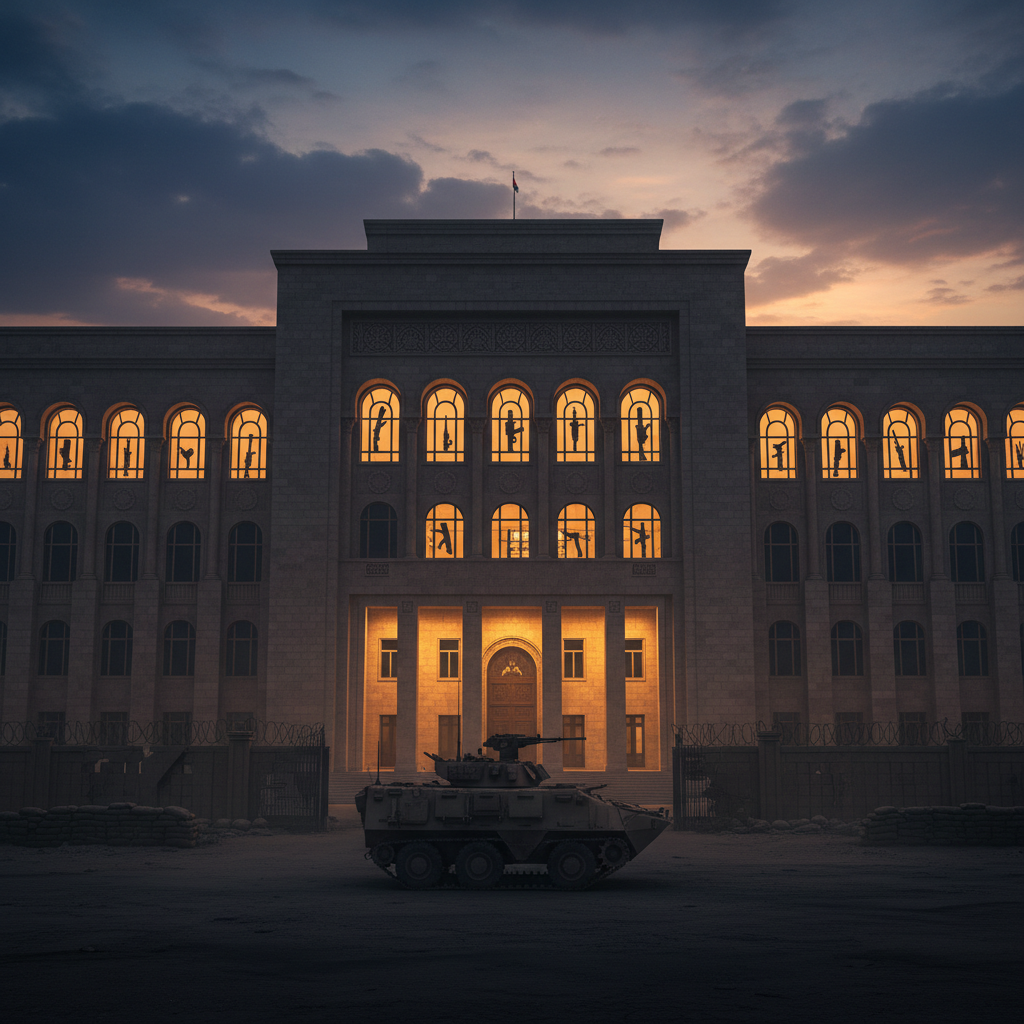
Iraq's Prime Minister Ali al-Zaidi is grappling with a severe political and security crisis as a critical September 30 deadline approaches, mandating the consolidation of all weaponry under state control. Despite agreements from some armed groups, including Saraya al-Salam and Asaib Ahl al-Haq, to integrate into official security forces, the continued defiance of influential Shia paramilitaries poses a significant threat to the government's authority and the nation's stability.
Paramilitary Defiance Threatens Disarmament Initiative
Key factions like Kataib Hezbollah, heavily armed and aligned with Iran, have explicitly rejected the government's mandate. They have vowed to maintain their arsenal, referring to them as "resistance weapons," and have indicated plans to further develop their military capabilities. Similarly, Harakat al-Nujaba has argued that the disarmament push should focus on illegal weapons causing chaos, rather than the arms held by groups they claim defended Iraq during difficult times.
The push for disarmament is reportedly influenced by pressure from the United States, particularly in the context of broader regional conflicts and Iraq's need to attract foreign investment. The nation's economy, heavily reliant on oil revenues, has faced significant challenges, including disruptions to oil exports that have impacted state finances.
Undermining State Authority and Sovereignty
Observers express deep concern that the refusal of these powerful armed factions to disarm fundamentally questions the very concept of a functioning Iraqi state. Talib Mohammed Karim, a professor of political thought, stated that the existence of armed groups outside state control undermines the constitutional order. He also cast doubt on the sincerity of reported agreements to disarm, suggesting they might be superficial or for media consumption.
Political analyst Kadhim al-Hajj argued that using the presence of foreign troops or external threats as an excuse to retain arms is no longer valid, especially given the current geopolitical landscape. He emphasized that the disarmament process must be seen as a sovereign Iraqi matter, free from external dictation, and driven by a national approach.
An Existential Moment for Iraq
With the deadline fast approaching, experts believe the government has limited options. Political analyst Omar al-Nasser described the standoff as an existential challenge for Iraq's future. He warned that failure to establish state control over weapons could lead to severe economic repercussions, including sanctions and a ban on oil exports. Al-Nasser suggested that the ruling coalition faces a stark choice: either build a strong state with weapons confined to state institutions or face international penalties.
Given the urgency, there is speculation that the government might be compelled to extend the deadline to avoid an immediate confrontation. Potential resolutions include the swift integration of armed groups into state institutions, a gradual process achieved through dialogue, or, as a last resort, a direct confrontation. The path forward remains uncertain, with the future of Iraq's statehood hanging in the balance.
Synthesized from primary source
Al Jazeera — https://www.aljazeera.com/news/2026/8/5/iraq-faces-crisis-as-shia-armed-groups-defy-disarmament