Iran's Strikes Redefine US Military Doctrine in West Asia
Recent Iranian attacks have exposed the vulnerability of US bases, challenging long-held American strategies and potentially rendering future regional presence untenable.
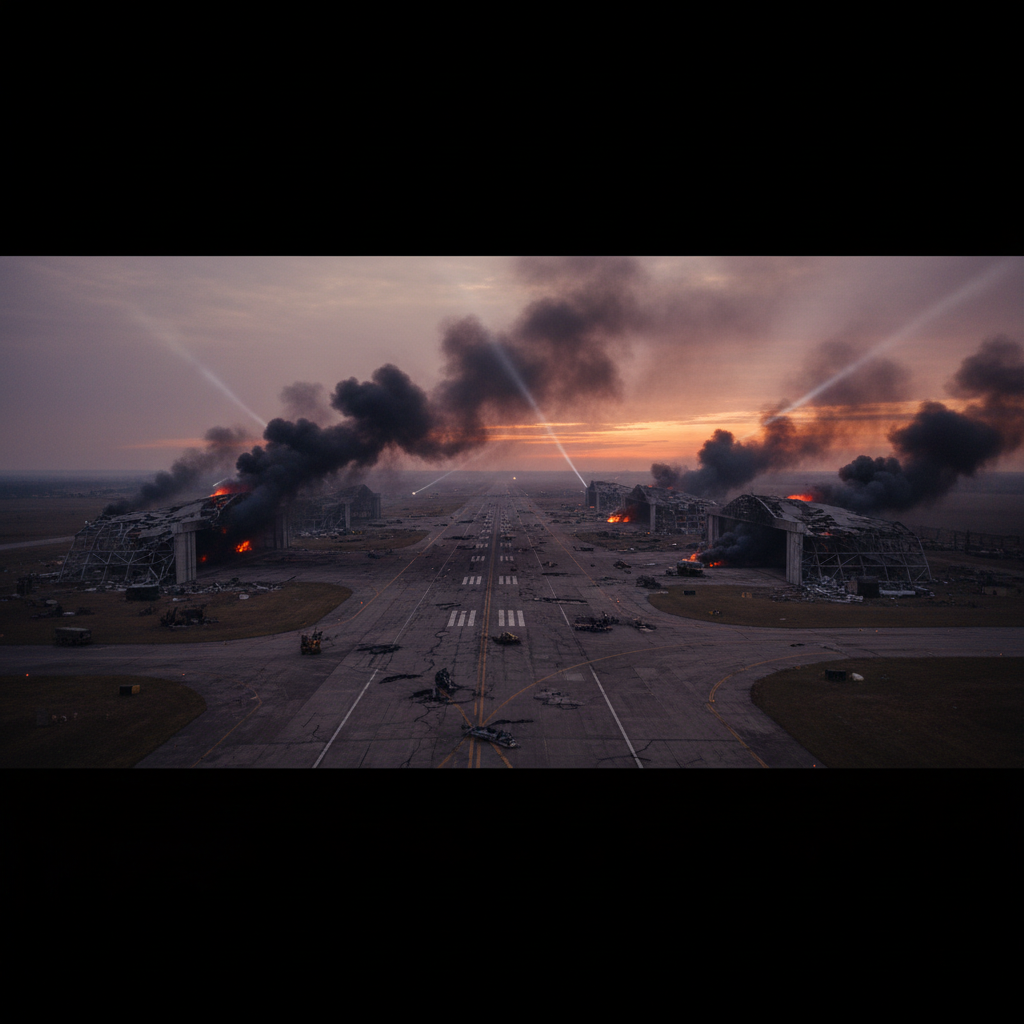
A recent report detailing significant damage inflicted by Iran on US military assets in West Asia, though partially acknowledged, understates the profound strategic implications. Leaked Department of Defense information, purportedly verified by satellite imagery, confirms that hundreds of Iranian strikes have crippled US bases, challenging the bedrock principle of 'force protection' that underpins American military doctrine in the region.
Erosion of Force Protection
Force protection, a critical component of US military planning, aims to safeguard personnel, facilities, and resources from hostile actions. For decades, particularly following the post-9/11 era and the Global War on Terror, US bases in West Asia were extensively developed with the stated purpose of 'containing Iran.' This doctrine prioritized the safety of troops and equipment, assuming a degree of invulnerability for these installations.
However, Iran's evolving missile and drone capabilities, significantly enhanced since the early 2000s, appear to have rendered these defensive postures obsolete. Reports suggest that Iranian precision strikes have targeted and destroyed vital infrastructure, including radar systems, and critically, have demonstrated an ability to bypass or overwhelm US air defense systems. This directly undermines the concept of secure bases and raises questions about the viability of maintaining such a presence.
A New Regional Reality
The effectiveness of Iranian strikes, including those against bases in Iraq which have contributed to a significant reduction in US presence there, suggests a fundamental shift in the regional military balance. The notion that US bases can be protected is now severely undermined, making them potential liabilities rather than strategic assets.
Former Iranian IRGC commander Mohsen Rezaei’s past warnings about the potential for sinking US vessels and capturing forces highlight Iran's willingness to exploit these vulnerabilities. The recent attacks suggest this is not mere rhetoric, but a demonstrated capability. Reports of drone and missile attacks reaching targets in multiple countries, including the UAE, Iraq, Kuwait, and Bahrain, even affecting personnel located off-base in hotels, indicate that no location is truly secure.
Strategic Reassessment Required
The cost and risk associated with maintaining bases that can no longer guarantee the security of US personnel and assets present a stark dilemma for Washington. Decades of military expansion aimed at regional containment now face an adversary demonstrating the capacity to inflict unacceptable damage. US Central Command's efforts to move personnel to hotels, while seemingly a measure to mitigate risks, paradoxically placed them within the demonstrated strike envelope. Iran’s advancements in subterranean missile base construction, reportedly impervious to conventional weaponry, further complicate any potential US response or deterrence strategy.
The narrative that US bases are merely experiencing isolated incidents or 'paper cuts' is being challenged by evidence of systemic damage. This new reality necessitates a significant reassessment of US West Asia doctrine, as the era of secure, unassailable bases appears to be drawing to a close, forcing a reevaluation of Washington’s long-term strategic objectives and footprint in the region.
Synthesized from primary source
The Cradle — https://thecradle.co/articles/us-bases-are-not-coming-back-irans-strikes-rewrite-washingtons-west-asia-doctrine