Iran's Growing Threat: US Military Assets in West Asia Under Scrutiny
As regional tensions rise, a strategic shift places American bases in the Middle East increasingly vulnerable to Tehran's expanding missile and drone capabilities.
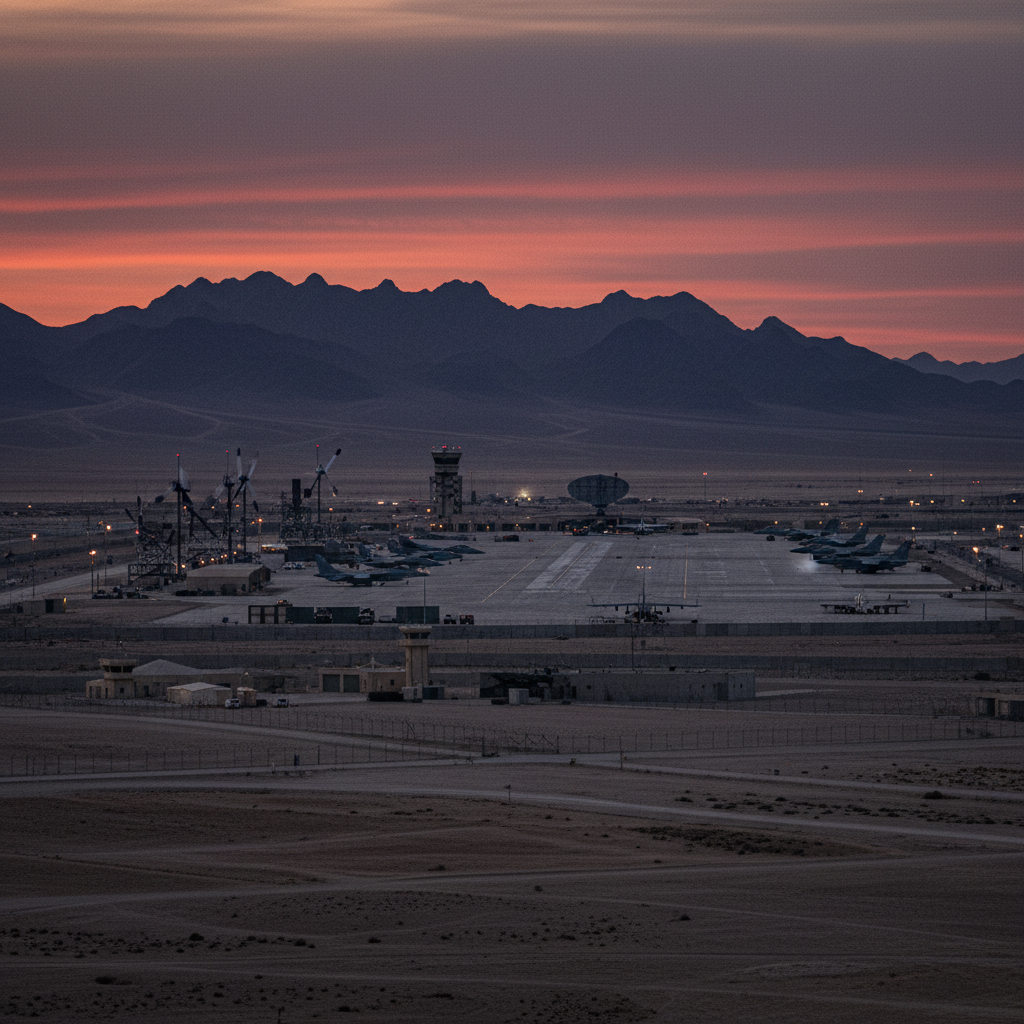
A prominent former US military commander has highlighted a significant change in the regional threat landscape, identifying Iran as the principal challenge to American interests in West Asia. This assessment comes amid escalating conflict and growing Iranian military capabilities, raising questions about the vulnerability of U.S. assets across the region.
Evolving Threats and Strategic Posturing
The strategic rationale behind the U.S. military's extensive network of bases in the Middle East has undergone a profound transformation. Initially established to counter Soviet influence, these bases became crucial after the 1979 Iranian Revolution. However, with the collapse of the Soviet Union and subsequent U.S. military interventions, particularly in Iraq, American strategic priorities shifted dramatically. The focus moved from deterring a superpower to countering the rising influence of Iran and its regional allies within the so-called "Axis of Resistance." Official U.S. documents, including the 2022 National Security Strategy, now explicitly cite the deterrence of Iran as a primary objective for U.S. military planners in the Middle East.
This strategic recalibration acknowledges that the traditional roles and placements of these bases, often remnants of past geopolitical rivalries, may no longer adequately address contemporary threats. The expanding missile and drone capabilities of Iran present a direct and proximate danger to facilities that were once considered relatively secure.
Potential Targets in Iran's Crosshairs
Several key U.S. military installations in West Asia are now considered potential targets should tensions with Iran escalate. Ain al-Asad Air Base in Iraq's Anbar province, which houses thousands of U.S. troops and provides extensive logistical and training support, was directly targeted by Iran in 2020 following the assassination of General Qassem Soleimani. This incident underscored the tangible threat posed by Tehran to American military infrastructure.
The U.S. Fifth Fleet's naval support activity in Bahrain, responsible for operations across crucial waterways like the Red Sea, Arabian Gulf, and the Strait of Hormuz, represents another critical asset. The fleet's significant presence of warships, including submarines and aircraft carriers, and its role in safeguarding global trade and energy routes, make it a high-value target.
Other significant bases that could face Iranian retaliation include Prince Sultan Air Base in Saudi Arabia, which has seen a renewed U.S. military presence since 2019, and Al-Udeid Air Base in Qatar. Al-Udeid, the largest U.S. base in West Asia, serves as a major hub for CENTCOM operations and intelligence gathering across the region. Al-Dhafra Air Base in the United Arab Emirates also hosts a substantial contingent of U.S. troops and advanced aircraft, playing a vital role in surveillance and air operations.
Iran's Advanced Arsenal
Iran possesses a growing arsenal of ballistic missiles and drones capable of reaching these U.S. installations. Medium-range missiles such as the Sejjil, capable of carrying substantial payloads over 2,000 kilometers, and the Khaybar, a fourth-generation ballistic missile with similar range and enhanced payload capacity, place these bases within striking distance. Older systems like the Shahab-3, while less precise, are effective against large targets like airfields, and Iran's integration of advanced guidance technology has improved accuracy. The Emad missile, Iran's first precision-guided ballistic missile, further enhances its ability to strike specific targets accurately at ranges up to 1,800 kilometers.
The combination of Iran's expanding military reach and the evolving geopolitical landscape in West Asia necessitates a careful re-evaluation of the security posture of U.S. military assets throughout the region.
Synthesized from primary source
The Cradle — https://thecradle.co/articles/will-us-military-assets-in-west-asia-become-irans-next-target