Iran Tensions Threaten Global Oil Flow Through Strait of Hormuz
Escalating conflict between the US, Israel, and Iran risks disrupting a critical global energy chokepoint, sending shockwaves through oil markets and economies worldwide.
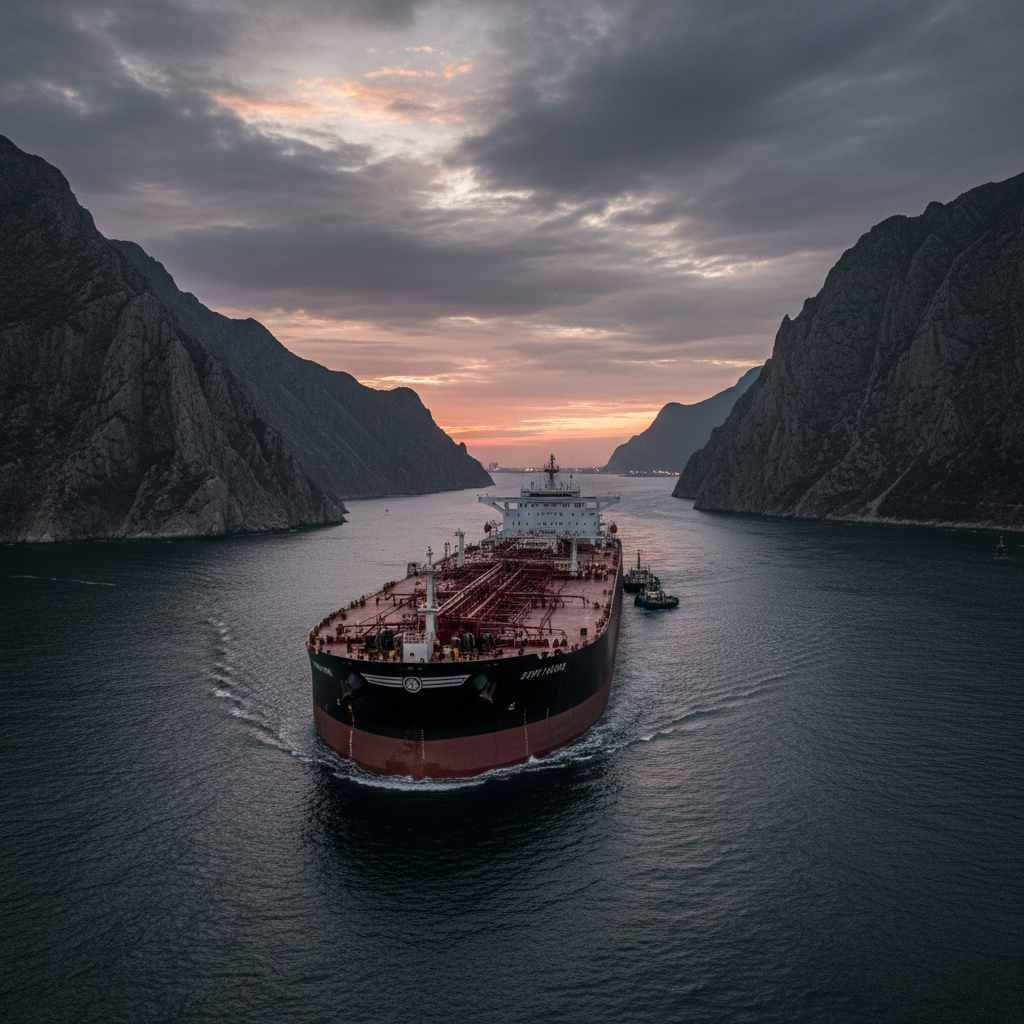
The strategic Strait of Hormuz, a vital chokepoint for global energy supplies, is facing unprecedented disruption amid escalating tensions between the United States, Israel, and Iran. Recent attacks attributed to the US and Israel have prompted retaliatory actions from Tehran, targeting assets across the Middle East and raising fears of a complete shutdown of the waterway.
A Critical Global Lifeline
Connecting the Persian Gulf to the Gulf of Oman, the Strait of Hormuz is a narrow maritime passage, only 33 kilometers wide at its narrowest point, with shipping lanes just 2 kilometers across. Despite its confined dimensions, it serves as the transit route for approximately 20 million barrels of oil daily, representing a significant portion of global seaborne crude oil and crucial for liquefied natural gas (LNG) shipments, particularly from Qatar. In 2024, around 84% of crude oil passing through the Strait was destined for Asian markets, with China, India, Japan, and South Korea being the primary recipients.
Analysts warn that any interruption to this vital artery could have severe repercussions on global economic stability. "The Strait of Hormuz is critical to the global energy market, as roughly 30 percent of the world’s seaborne crude oil transits the waterway," stated Muyu Xu, senior crude oil analyst at Kpler. "In addition, nearly 20 percent of global jet fuel and about 16 percent of gasoline and naphtha flows also pass through the Strait."
Market Volatility and Rising Prices
Following a recent escalation, shipping companies and oil traders have grown increasingly concerned. Reports indicate that Iran’s Islamic Revolutionary Guard Corps (IRGC) has been transmitting warnings to vessels, although the strait has not been officially closed. Nevertheless, numerous tanker owners have suspended shipments, and countries like Greece have advised their vessels to avoid the area. This heightened uncertainty has led to a sharp drop in vessel traffic and a surge in vessels idling in adjacent waters.
The impact on oil prices is already being felt, with fears of a supply shock causing them to spike. "On Sunday, an oil tanker was struck off the coast of Oman just hours ago, signalling a clear escalation of the conflict and a shift in targets from purely military facilities to energy assets," noted Xu. Experts predict that a closure, even a temporary one, would cause oil prices to "gap violently upward on fear alone," according to Ali Vaez, director of the Iran project at the International Crisis Group. He added that such a disruption would "reverberate far beyond energy markets, tightening financial conditions, fuelling inflation, and pushing fragile economies closer to recession."
Broader Economic Ramifications
Beyond immediate price surges, a sustained disruption in the Strait of Hormuz could lead to significant global inflation. Commodities economist Hamad Hussain explained that a persistent rise in oil prices to $100 per barrel could add 0.6-0.7% to global inflation and increase natural gas prices. This could force central banks, particularly in emerging markets, to slow down monetary easing due to their sensitivity to commodity price swings.
The current situation underscores the fragility of global energy markets and the far-reaching consequences of geopolitical instability in the Middle East. As nations reliant on Gulf energy watch closely, the potential for further escalation looms large over the world economy.
Synthesized from primary source
Al Jazeera — https://www.aljazeera.com/news/2026/3/1/how-us-israel-attacks-on-iran-threaten-the-strait-of-hormuz-oil-markets