Iran Conflict Sparks Refugee Crisis Fears in Neighboring Nations
As war escalates, countries bordering Iran brace for potential mass displacement, straining resources and raising humanitarian concerns.
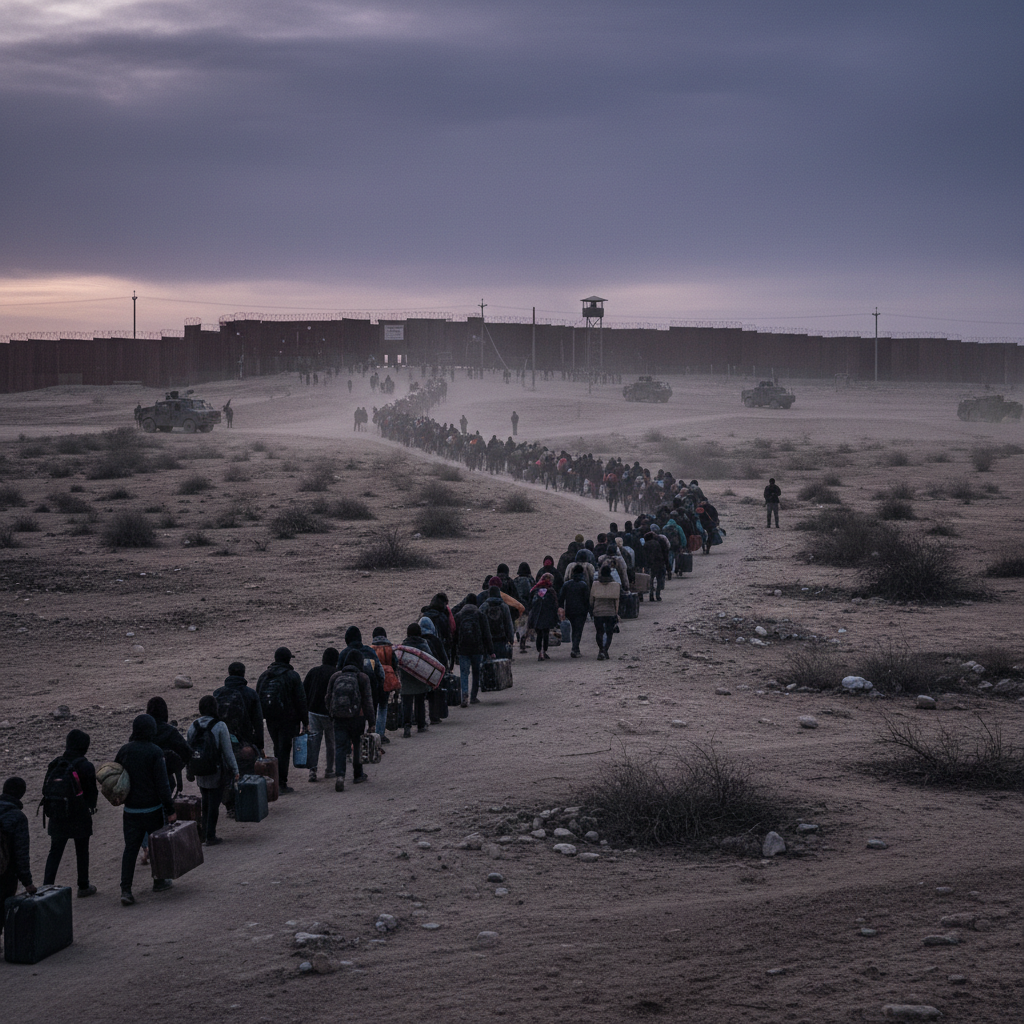
The ongoing conflict between the United States, Israel, and Iran, now in its third week, has resulted in significant casualties and economic disruption, pushing global oil prices past $100 a barrel. Beyond the immediate violence, aid agencies and Iran's neighbors are increasingly apprehensive about a burgeoning refugee crisis.
Internal Displacement and External Concerns
The United Nations High Commissioner for Refugees (UNHCR) reports that over 3.2 million people have already been internally displaced within Iran since the hostilities commenced on February 28. While cross-border movement has been limited thus far, anticipation of large-scale outflows has placed Iran's seven neighboring countries on high alert. These nations – Afghanistan, Armenia, Azerbaijan, Iraq, Pakistan, Turkey, and Turkmenistan – each face unique political, economic, and security challenges that could be exacerbated by a sudden influx of refugees.
Reports indicate that over 10,000 civilian sites in Iran, including schools and medical facilities, have sustained damage. Attacks on residential areas in major cities have led to the suspension of commercial flights and the closure of Iranian airspace. Analysts suggest that if bombing campaigns continue to target key infrastructure, such as power grids or water supplies, particularly in densely populated areas like Tehran, it could trigger mass evacuations.
"Infrastructure destruction does not produce the gradual, manageable flows that the Syrian war initially generated. It produces sudden, massive displacement, driven by the collapse of basic urban services," noted Eldaniz Gusseinov, a geopolitical analyst at Nightingale International. He added that current strike patterns are concentrating internally displaced persons (IDPs) in provinces near Turkmenistan, Afghanistan, and Pakistan, creating conditions ripe for cross-border migration.
Turkey's Refugee Management Preparedness
Turkey, which shares a 530km border with Iran and permits visa-free entry for Iranian citizens, faces significant exposure. Already hosting approximately 3.6 million Syrian refugees, the nation is concerned about a repeat of the Syrian migration crisis. Turkish authorities have developed contingency plans, including intercepting migration flows within Iran, establishing buffer zones, and, as a last resort, controlled entry into Turkey.
The Turkish Ministry of National Defence stated in January that border security measures had been enhanced, including the construction of walls and observation posts, in anticipation of potential instability. While mass migration has not yet been detected, a recent incident involving an Iranian ballistic missile fragment landing in Turkish airspace highlights the proximity of the conflict's fallout.
Potential Scale and Dual Crises
The sheer population size of Iran, estimated at 90 million, raises concerns about the potential scale of displacement. A conflict affecting Iran proportionally to the Syrian civil war could see tens of millions displaced internally and millions more seeking refuge abroad. This scenario would place an immense burden on international aid agencies, whose capacity may be insufficient.
Furthermore, Iran itself hosts a significant refugee population, primarily from Afghanistan. Any mass exodus from Iran could create a dual crisis, forcing not only Iranian civilians to flee but also displacing existing Afghan and Iraqi refugees, potentially pushing them back into countries ill-equipped to receive them.
Iraq and Caucasus Nations Face Complexities
Iraq, sharing Iran's longest border, confronts a particularly intricate situation. The country has become a theater for proxy engagements between the US and Iran. Disruptions along the Iranian side of the border have led to the closure of several crossing points, complicating potential refugee movements. The Iraqi government is expected to lead any emergency response, with the semi-autonomous Kurdish region in the north presenting additional complexities due to its visa-free entry policy for Iranians and the presence of Kurdish armed groups.
In the South Caucasus, Armenia, Azerbaijan, and Georgia are navigating delicate diplomatic balances. Azerbaijan has tightened border controls, while Armenia's shorter border remains open, though its capacity to absorb refugees is limited by its small economy and existing migrant population.