House Votes to End US Combat Operations in Iran, But Does it Matter?
Lawmakers pass War Powers Act resolution, marking a rebuke to President Trump's offensive, but challenges remain in halting hostilities.
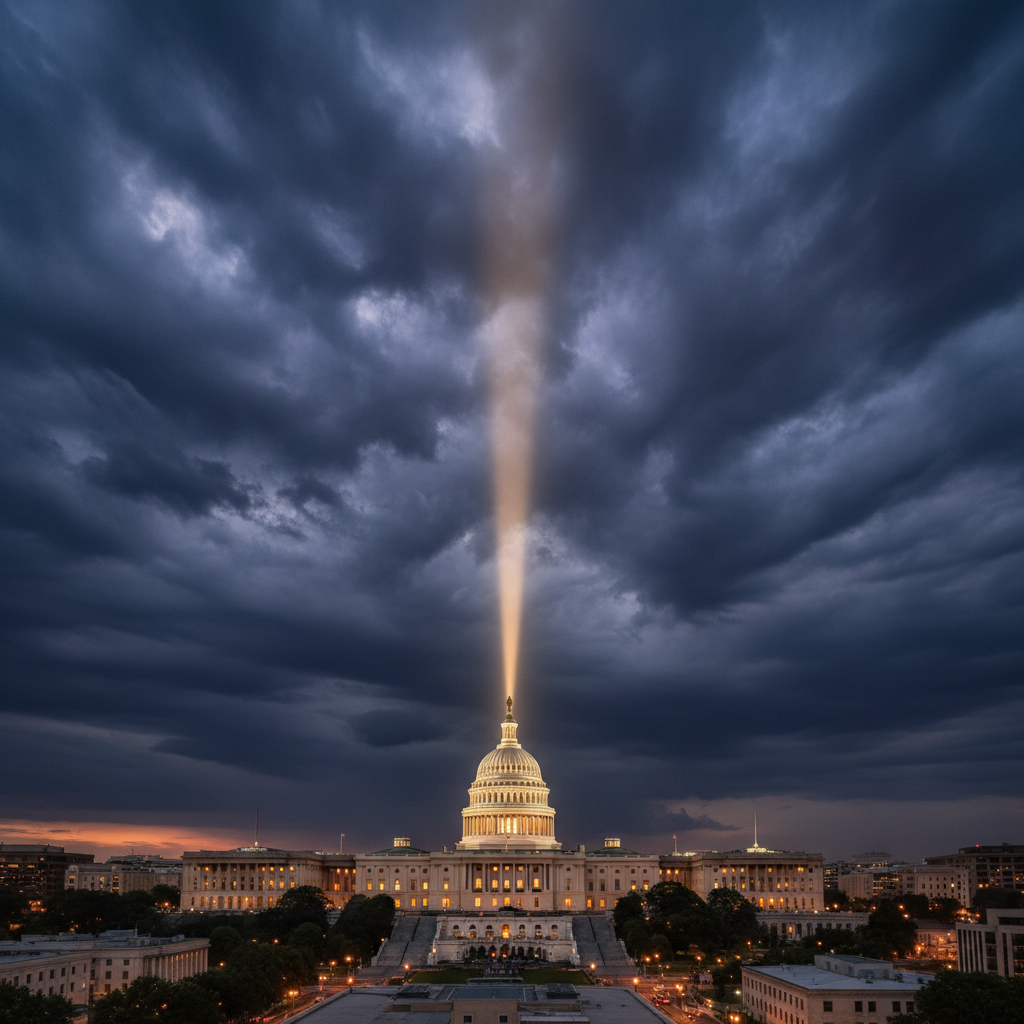
In a significant move, the US House of Representatives has voted to terminate President Trump's engagement in military operations against Iran. The resolution, passed by a narrow margin of 215-208, aims to invoke the War Powers Act, a 1973 law intended to limit the president's ability to commit US forces to armed conflict without congressional consent. This marks the first successful legislative effort to curb the protracted conflict, which has now entered its fourth month.
Background and House Dynamics
The vote comes amidst growing domestic opposition, fueled by substantial civilian casualties, global trade disruptions, and concerns over the economic impact on the United States. Initially, the war garnered strong bipartisan support, but recent failures to secure a lasting peace deal and the conflict's continued toll have shifted sentiments, even within President Trump's Republican Party. Four Republicans ultimately broke ranks to support the resolution, signaling a notable shift in political alignment.
Democrats have consistently argued that the Trump administration initiated military actions without the constitutionally mandated authorization from Congress. They contend that the War Powers Act requires presidential consultation and approval for hostilities, except in cases of imminent threat. Critics point out that the US and its allies initiated the strikes, negating the imminence argument, and that the administration failed to adhere to the Act's 60-day limit for troop deployment without explicit congressional backing.
Symbolic Victory, Practical Hurdles
Despite the House's affirmative vote, the resolution's immediate impact is largely symbolic. Several significant hurdles remain. Firstly, the Senate, where Republicans hold a slim majority, must also pass the resolution. Previous attempts in the Senate have been stymied by Republican votes, although growing dissent within the party has been observed. Even if both chambers approve the measure, President Trump possesses the power to veto it. Overriding such a veto would require a two-thirds majority in both the House and Senate – a high bar, particularly given the current political climate and the majority of Republicans' continued public support for the president.
Defining the Conflict: War or Ceasefire?
Adding another layer of complexity is the ongoing debate over whether the US is technically still at war with Iran. A fragile ceasefire has been in place since April 8, leading the Trump administration to argue that active hostilities have ceased. Secretary of State Marco Rubio asserted during recent congressional hearings that "the war is over." However, opponents, including Democratic Senator Jeanne Shaheen, accuse the administration of obfuscation, citing continued actions such as the blockade of Iranian ports and strikes on Iranian ships, as well as ongoing Iranian actions, as evidence that the conflict persists.
The administration's interpretation hinges on the idea that the ceasefire resets the clock outlined by the War Powers Act. Defense Secretary Pete Hegseth suggested that this interpretation allows the possibility of recommencing military operations without immediate congressional approval, should the president deem it necessary. This legal and definitional ambiguity complicates efforts to definitively end US involvement.
Future Outlook
While the House vote represents a significant political statement and a potential turning point in legislative oversight of presidential war powers, its ability to immediately halt conflict operations remains uncertain. The path forward is fraught with procedural challenges and contentious legal interpretations, highlighting the deep divisions surrounding US foreign policy and the executive's role in initiating and sustaining military engagements abroad.
Synthesized from primary source
Al Jazeera — https://www.aljazeera.com/news/2026/6/4/us-house-votes-to-end-trumps-iran-war-does-it-matter