Guinea-Bissau Coup Destroys Election Data, Halts Vote
Military seize ballots, tally sheets, and servers, rendering presidential election results irretrievable. International pressure mounts for restoration of constitutional order.
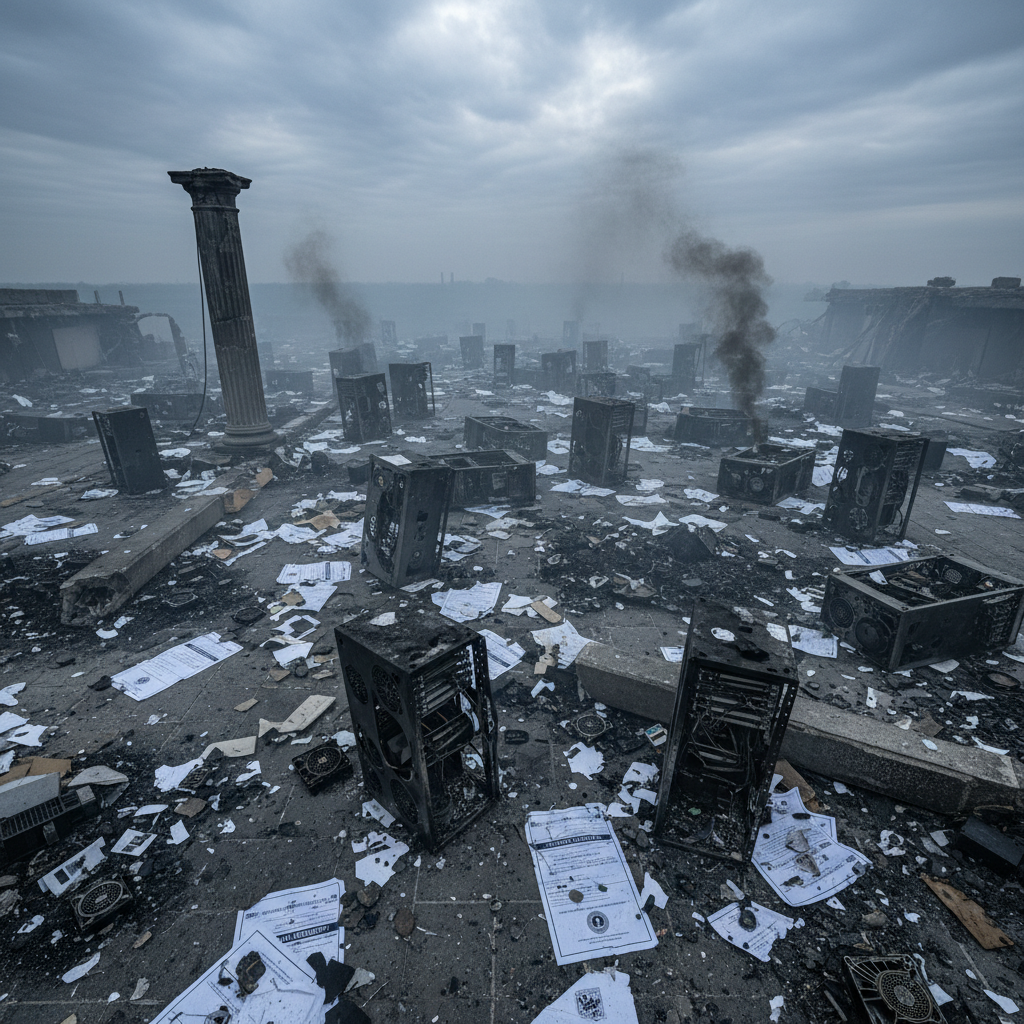
Guinea-Bissau's fragile democratic process has suffered a severe blow after a military coup on November 26 destroyed crucial election materials and data, leaving the electoral commission unable to finalize the presidential vote held just days earlier.
Armed individuals raided the commission's headquarters, confiscating computers, tally sheets from all regions, and critically, destroying the central server that stored the provisional election results. The raid occurred the day before the commission was scheduled to announce the outcome of the tightly contested November 23 presidential election.
"We do not have the material and logistic conditions to follow through with the electoral process," stated Idrissa Djalo, a senior official at the electoral commission, in a somber announcement. He detailed the confiscation of computers belonging to all staff present, along with the seizure of tally sheets, making any attempt to reconstruct the results impossible.
Political Turmoil Amidst Coup
The coup d'état halted the electoral process entirely. Major-General Horta Inta-A was swiftly sworn in as the new transitional president on November 27. The military has since imposed restrictions, banning demonstrations and strikes, and has appointed a 28-member cabinet largely composed of figures aligned with the previously ousted administration. Inta-A has outlined a plan for a one-year transitional period.
The election itself was marked by controversy and uncertainty. Both the incumbent President Umaro Sissoco Embalo and his main opposition challenger, Fernando Dias da Costa, had claimed victory prior to the official announcement of results. Embalo, who reportedly communicated his deposition and arrest to French media by phone during the takeover, has since fled to Brazzaville. Nigeria has confirmed it is providing protection for Dias da Costa due to an "imminent threat to his life."
Adding to the political climate, the PAIGC, a historically dominant political party, was barred from presenting a candidate in this election. This decision drew condemnation from civil rights organizations, who viewed it as part of a concerted effort to suppress opposition voices.
International Scrutiny and Demands
The military junta is now facing significant pressure from the Economic Community of West African States (ECOWAS). A high-level delegation, led by ECOWAS chairman and Sierra Leonean President Julius Maada Bio, met with Guinea-Bissau's military leaders and electoral officials on December 1st. The delegation's primary objective was to advocate for the "complete restoration of constitutional order" and the resumption of the electoral process.
ECOWAS leaders are scheduled to convene on December 14 to further discuss the escalating crisis in Guinea-Bissau. The bloc has previously indicated its readiness to impose sanctions on entities undermining democratic principles and constitutional rule, signaling potential repercussions for the nation's military leadership if democratic norms are not reinstated.