Gaza's Economy in Freefall: 80% Unemployment Fuels Desperate Survival
As conflict decimates infrastructure and formal employment, Gazans turn to small, improvised initiatives in a struggle for daily existence.
The economy of the Gaza Strip is facing an unprecedented collapse, with the United Nations reporting an staggering 80 percent unemployment rate. This dire economic situation, exacerbated by over two years of relentless conflict, has left the besieged Palestinian territory with one of the highest joblessness figures globally. Formal employment opportunities have virtually vanished, forcing hundreds of thousands to seek alternative means of survival.
Improvised Livelihoods Emerge Amidst Devastation
In the face of widespread destruction of homes, infrastructure, and the formal job market, Palestinians in Gaza are demonstrating remarkable resilience by developing small-scale, often informal, entrepreneurial ventures. These initiatives, born out of necessity, range from micro-businesses offering essential services to skilled crafts providing a meagre income.
For many, like Um Mohammed al-Jarjawi, a widow supporting five family members, traditional skills have become a vital lifeline. Al-Jarjawi, who learned knitting at a young age and honed her craft through specialized courses, now relies on her needlework to provide for her household. She also dedicates time to teaching her skills to younger generations, ensuring the continuation of this vital practice.
“I started learning knitting when I was 10 years old,” al-Jarjawi shared. “Later, I attended courses at specialised centres. I discovered that I was skilled at the craft and began training others. After my husband passed away, I needed to support my household. I focused on working to provide for my family while improving my skills.”
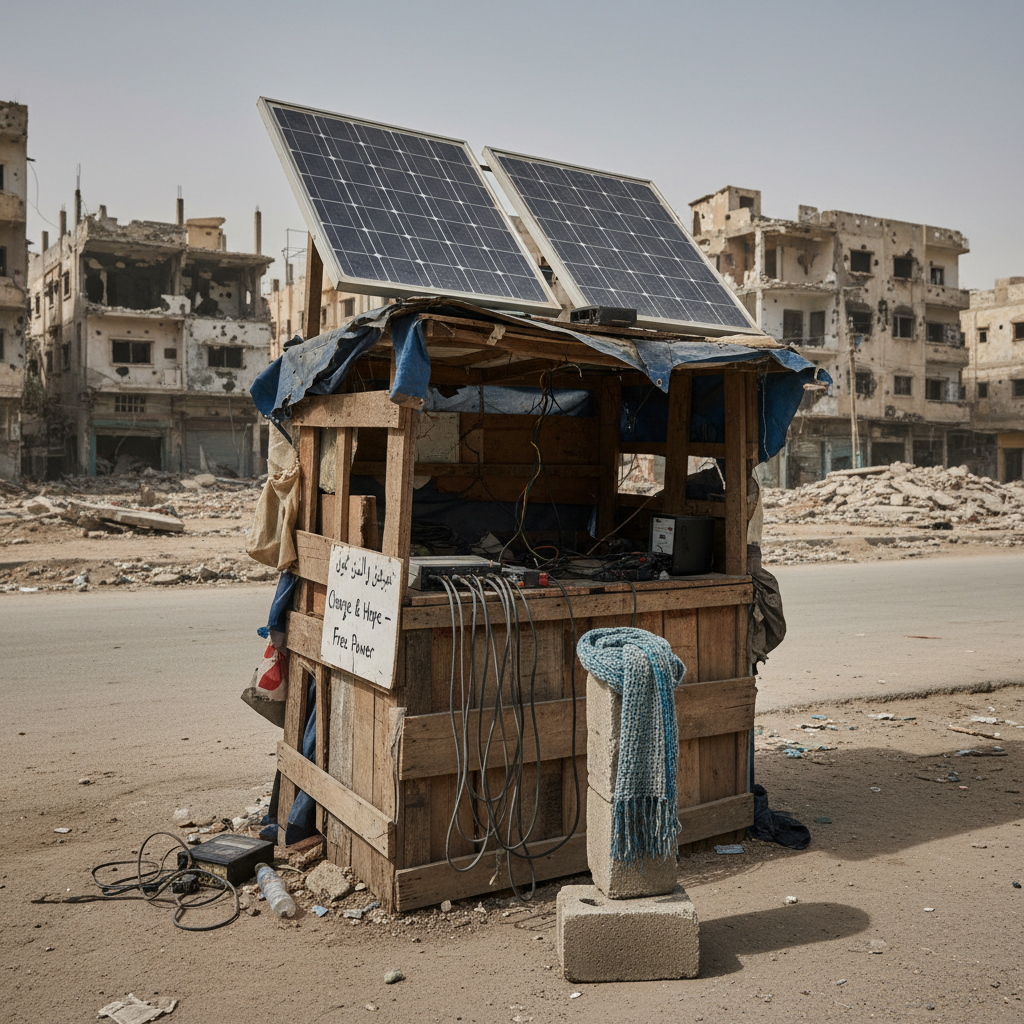
Similarly, Wasim al-Yazji has established a makeshift solar-powered phone-charging station. This initiative, while offering some income for basic needs and expenses, is a fragile solution dependent on weather conditions. “My charging station depends on solar panels, so if the sun doesn’t shine, the charging power is weak and I can’t work for days. Sometimes a whole week passes under clouds without any income,” al-Yazji explained.
Systemic Collapse and Fragile Solutions
The near-total collapse of Gaza's power system, with 70 percent of electricity networks destroyed, has crippled formal economic activity and forced widespread reliance on improvised solutions like solar power. However, these small ventures, while crucial for immediate survival, are insufficient to restore economic stability or create sustainable employment.
Young men and women like Mohammed Shatat are finding it increasingly difficult even to secure temporary work. "I've been looking for a job for months," Shatat told reporters. "Even temporary work is hard to find. Every day feels the same… I go from place to place, asking, hoping, but there’s nothing."
The widespread destruction of businesses, including al-Yazji's former supermarket, coupled with the ongoing blockade and the severe impact on essential services, has created a cycle of economic hardship. While families are finding innovative ways to cope, the scale of unemployment remains a profound challenge, underscoring the urgent need for comprehensive economic recovery and sustainable development in Gaza.