Ancient Lebanese Heritage Sites Threatened by Escalating Israeli Offensive
Centuries-old castles, Phoenician ruins, and historic cities in southern Lebanon face unprecedented danger amidst Israel's deepest military incursion in decades.
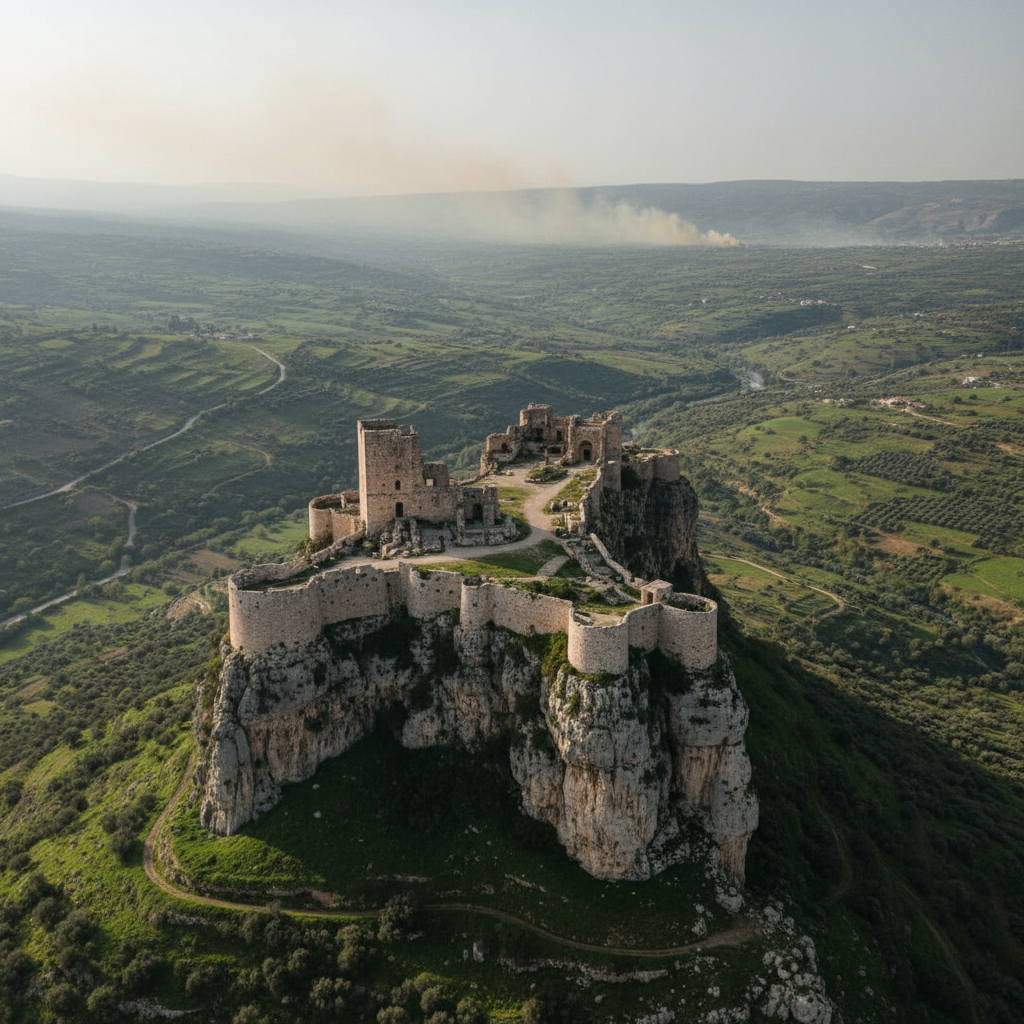
Lebanon's rich tapestry of history, spanning millennia, is increasingly under threat as Israel's military operations expand into the country's southern regions. Numerous archaeological and cultural treasures, many designated for international protection, are now caught in the crossfire of the escalating conflict.
Centuries of History Under Siege
Recent advances by Israeli forces have seen them capture Beaufort Castle, a formidable 900-year-old Crusader fortress near Nabatieh. This event marks the deepest Israeli military penetration into Lebanese territory in 26 years, with troops pushing beyond the Litani River.
Lebanon's Minister of Culture, Ghassan Salame, has voiced grave concerns, stating that Israeli attacks are placing vital heritage sites, including those in the ancient city of Tyre, in 'serious danger.' Tyre, a city dating back to the third millennium BC, was once a major Phoenician maritime power and boasts extensive Roman-era ruins and one of the Roman Empire's largest hippodromes. The displacement of tens of thousands from Tyre and its surroundings, part of a wider exodus affecting over a million Lebanese, further exacerbates the potential for cultural loss.
UNESCO Protection and Cultural Identity
Lebanon is home to six UNESCO World Heritage Sites and at least 39 other cultural sites granted provisional enhanced protection under international law. These designations, governed by the 1954 Hague Convention, signify a commitment to safeguarding cultural heritage, which UNESCO describes as a 'backbone of people’s identity.' Any noncompliance is considered a serious breach.
Lazare Eloundou Assomo, UNESCO's Assistant Director-General for Culture, has previously emphasized that the destruction of heritage 'undermines moral standards, erodes social cohesion, and jeopardizes trust and resilience.'
Key Heritage Sites at Risk
- Beaufort Castle (Qalaat al-Shaqif): A 12th-century Crusader fortress with immense strategic importance, it has witnessed centuries of control shifts and served as a base for various groups before being captured by Israel in 1982.
- Tyre: An ancient Phoenician metropolis, its archaeological remains, particularly the Roman hippodrome, are significant testaments to its historical prominence.
- Four Medieval Castles: Including Qalaat Tibnin, Qalaat Chakra, Qalaat Deir Kifa, and Qalaat Chamaa, these sites showcase the evolution of military architecture and contain layers of history from Roman times and earlier.
- Temple of Eshmun: Near Sidon, this sanctuary was dedicated to the Phoenician god of healing and is a crucial site for understanding ancient religious practices.
- Historic Centre of Saida (Sidon): A key Phoenician port city, its historic core includes an ancient tell, harbour, and castles, reflecting its long history of trade and industry.
- Chhim Archaeological Site: Preserves remains of a Roman and Byzantine village, offering insights into late antiquity rural life.
- The Chehabi Citadel: An ancestral stronghold in Hasbaiyya, it has been a seat of power for local rulers since the Crusader period.
- Qabr Hiram (Tomb of Hiram): A monumental Phoenician tomb traditionally linked to King Hiram, it highlights ancient burial customs.
- Qana Cave: This site, holding significance in Christian tradition, contains archaeological remains from the Chalcolithic and Early Bronze Age.
The ongoing military operations in southern Lebanon place these invaluable sites, representing diverse historical periods and cultural influences, in unprecedented peril. The potential loss extends beyond mere physical structures, threatening to erase tangible links to Lebanon's rich past and collective identity.
Synthesized from primary source
Al Jazeera — https://www.aljazeera.com/news/2026/6/3/israels-invasion-of-southern-lebanon-devastates-centuries-of-history