Albania Braces for More Unrest as Anti-Government Protests Turn Violent
Thousands took to the streets of Tirana demanding Prime Minister Edi Rama's resignation amid a widening corruption scandal, leading to clashes with police.
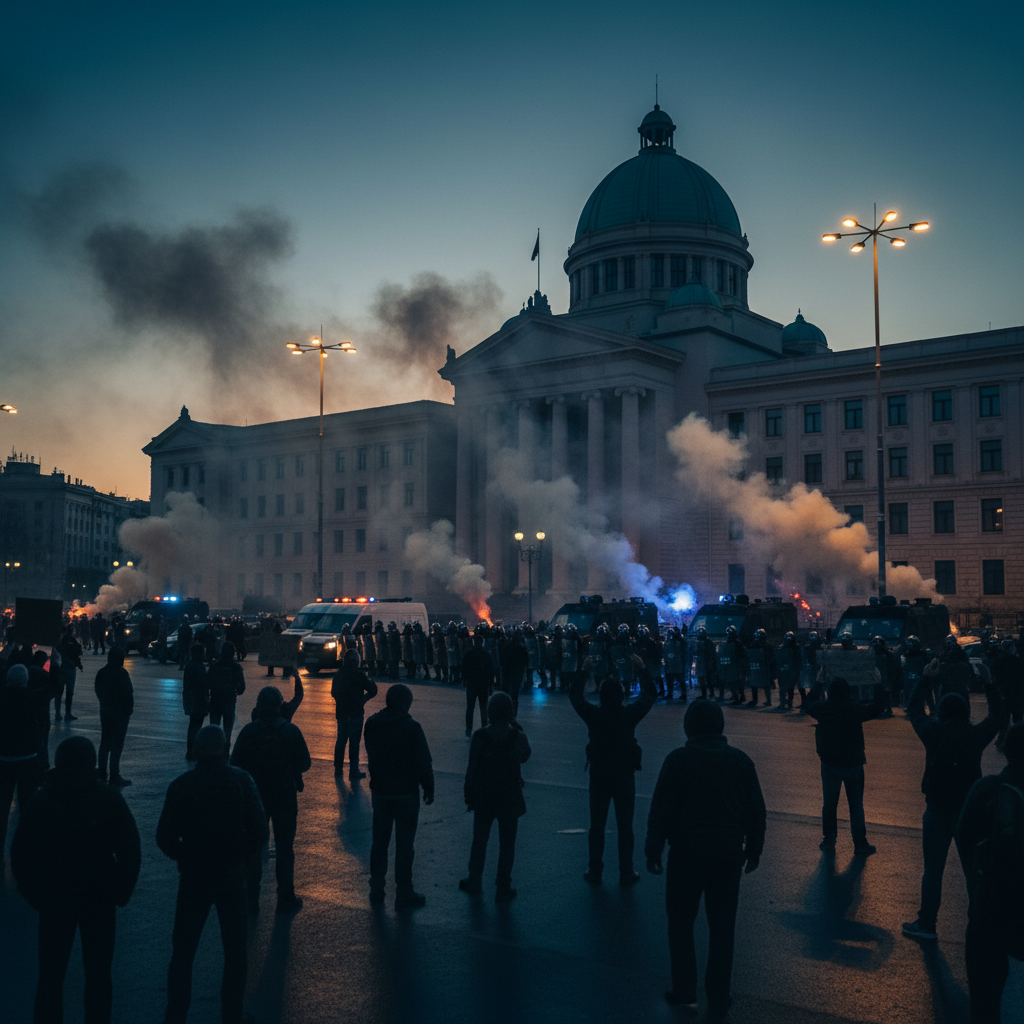
Tirana, Albania – The Albanian capital was gripped by unrest on Friday as thousands of demonstrators took to the streets, escalating protests against Prime Minister Edi Rama’s government. Clashes erupted between protesters and riot police, with security forces deploying tear gas and water cannons to disperse the crowds. The demonstrations, fueled by widespread accusations of corruption, have placed significant pressure on Rama’s administration.
The focal point of the protests was the area around the parliament building, where demonstrators, waving Albanian and opposition party flags, chanted slogans demanding Rama’s resignation and accusing his government of fostering corruption and economic hardship. The situation intensified when protesters hurled Molotov cocktails and fireworks towards the prime minister’s office before confronting the police lines guarding the legislature. The fierce clashes reportedly lasted for approximately two hours, resulting in multiple arrests.
Corruption Allegations Intensify Protests
The recent surge in anti-government sentiment is largely attributed to a significant corruption scandal that has ensnared high-ranking officials. In December, Deputy Prime Minister Belinda Balluku was indicted by a special prosecution unit and subsequently suspended pending an investigation. Balluku is considered a close associate of Prime Minister Rama. The ongoing probes have also targeted several former ministers within Rama's governments, deepening public distrust.
Opposition leaders have seized on the corruption allegations to rally support. Sali Berisha, leader of the Democratic Party, declared, “We will save Albania from Edi Rama, who has plunged the country into poverty and corruption.” He vowed that those involved in corrupt practices would face legal consequences, stating, “Let them know that even if they go behind the sun, we will find them and punish them with the full force of the law.”
The government, through Interior Minister Albana Kociu, condemned the violence, labeling the protesters' actions as “vandalism” and a “crime” against law enforcement officers. Despite the government’s stance, the opposition claims a significant number of their supporters were detained during the unrest, with figures differing between opposition and police reports.
Political Landscape and EU Aspirations
The Socialist Party, led by Prime Minister Rama, currently holds a strong parliamentary majority, having secured a fourth consecutive term in office last year. Albania is actively pursuing membership in the European Union, with a target date of 2030. However, the country's political landscape has long been characterized by a bitter rivalry between the left and right-wing parties, with mutual accusations of corruption and links to organized crime being a recurring theme.
The recent violent protests highlight the deep-seated political divisions and public frustration stemming from persistent corruption issues. The situation raises concerns about political stability as Albania navigates its path towards EU integration, with the government facing the dual challenge of addressing public discontent and maintaining its reform agenda.
Synthesized from primary source
Al Jazeera — https://www.aljazeera.com/news/2026/2/21/clashes-in-albania-as-protesters-demand-pm-rama-resign